Dec 15, 2025
Free AI Tool to Audit Website Accessibility — Save Time & Avoid Legal Risks
 Malik
Malik- •
- 06 MIN TO READ
 Malik
Malik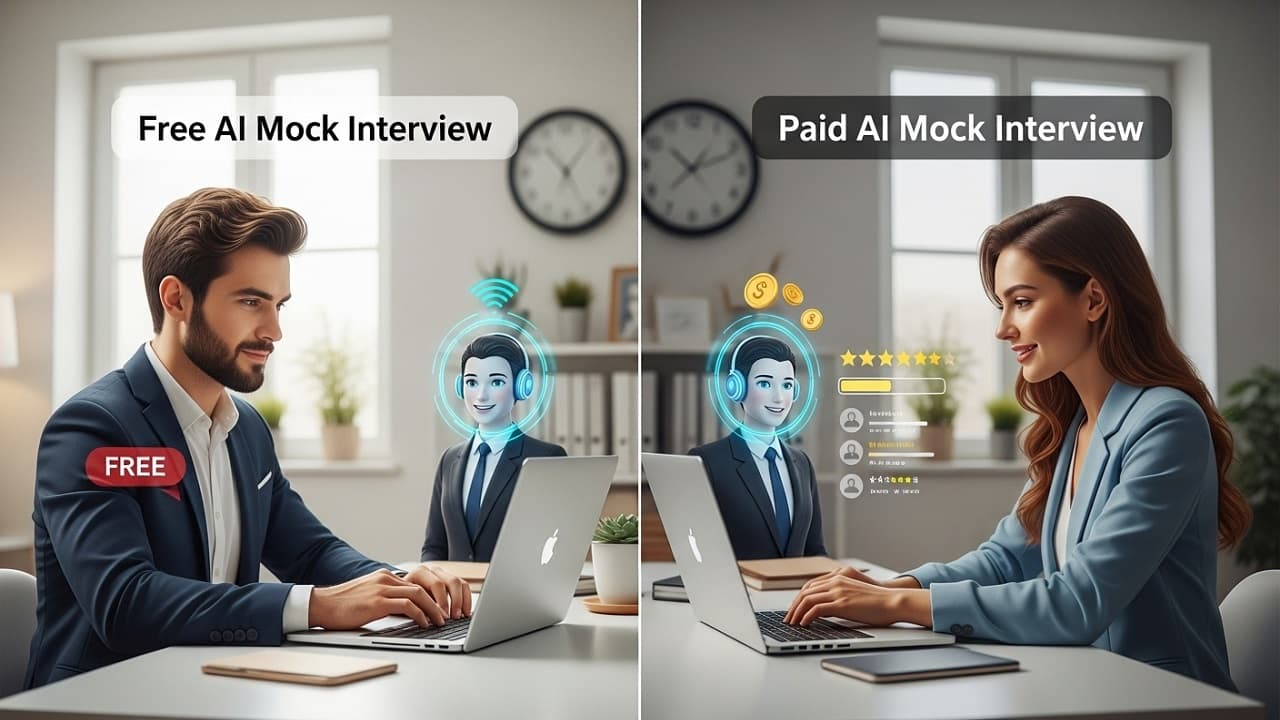
Mock Interview AI Free vs Paid: Which Is Better for Your Career?
Landing a great job today takes more than just the right skills. Recruiters want confident, articulate candidates who can clearly communicate their ideas under pressure. That is why Free AI-Based Mock Interview Practise Tools: How to Use Them & Why They Matter has become a popular search topic among job seekers.
These platforms simulate real interview environments, help candidates practise their responses, gain instant feedback, strengthen communication skills, and improve their hiring chances. Well-trained candidates perform better, feel less nervous, and deliver more structured answers, making AI interview preparation an invaluable part of modern job readiness.
Instead of practising with another person, candidates speak to the system, which analyzes:
These tools act like virtual recruiters, helping candidates prepare any time, anywhere.
According to global surveys, employers receive hundreds of applications per position. AI screening, ATS systems, and multiple interview rounds are now standard, making preparation critical.
This would be difficult to achieve with human-only practice.
No mentor or instructor required. You can practise:
This flexibility is why adoption is increasing rapidly.
This section covers the topic in detail so you understand both the practical use and strategic value of such tools in job preparation.
Most tools provide feedback instantly on aspects like:
Instead of waiting for a mentor’s response, users can correct mistakes immediately.
Some platforms also offer paid upgrades, but free versions are often enough for general practice:
This is significantly more affordable than paid coaching sessions.
Practising regularly builds confidence. Candidates enter real interviews:
It also familiarizes them with questions commonly asked in interviews.
AI tools highlight issues in:
With improvement, candidates become better speakers overall.
Instead of subjective feedback, you get:
This helps track progress every week.
Most platforms follow a similar workflow:
Use Google, LinkedIn, or email. Some tools allow instant access without registration.
Options include:
Choose a category based on your job interest.
Tools that score body language may request webcam access.
Questions are presented in different formats:
You answer verbally, just like a real interview.
Within seconds, AI assesses:
Some advanced tools also grade:
Reports may include:
With daily use, performance consistently improves.
When selecting a platform, ensure it offers:
Tools should cover:
Higher-quality platforms mimic:
Look for features like:
Some allow exporting PDFs that can be shared with mentors or coaches.
All the tools listed below provide free tiers with meaningful practice opportunities. You may explore their websites directly for more details:
These platforms are widely used by students, job hunters, and professionals preparing for career transitions.
Pros:
Cons:
These platforms are ideal for:
Whether you are a beginner or advanced professional, AI interview practice adapts to your level.
Content related to Free AI-Based Mock Interview Practise Tools: How to Use Them & Why They Matter ranks well because:
Websites can also create:
Use these best practices to maximize results:
Free AI-Based Mock Interview Practise Tools: How to Use Them & Why They Matter is no longer just a trending topic. It is a proven strategy for improving confidence, clarity, and job performance. Regular practice on AI tools provides structure, saves money, reduces stress, and gives measurable feedback that helps candidates compete effectively in today’s job market.
Yes. Many platforms offer fully free plans with essential features.
Not completely, but they provide structured feedback and convenience that helps supplement human coaching.
Yes. They identify weaknesses in tone, sentence clarity, and delivery, helping users improve over time.
Absolutely. They provide guidance suitable for both beginners and advanced candidates.
Some advanced systems analyze posture, eye contact, and facial expressions through webcam access.
For best results, practise at least three times a week and compare your score trends over time.
Malik AhmadAhmad